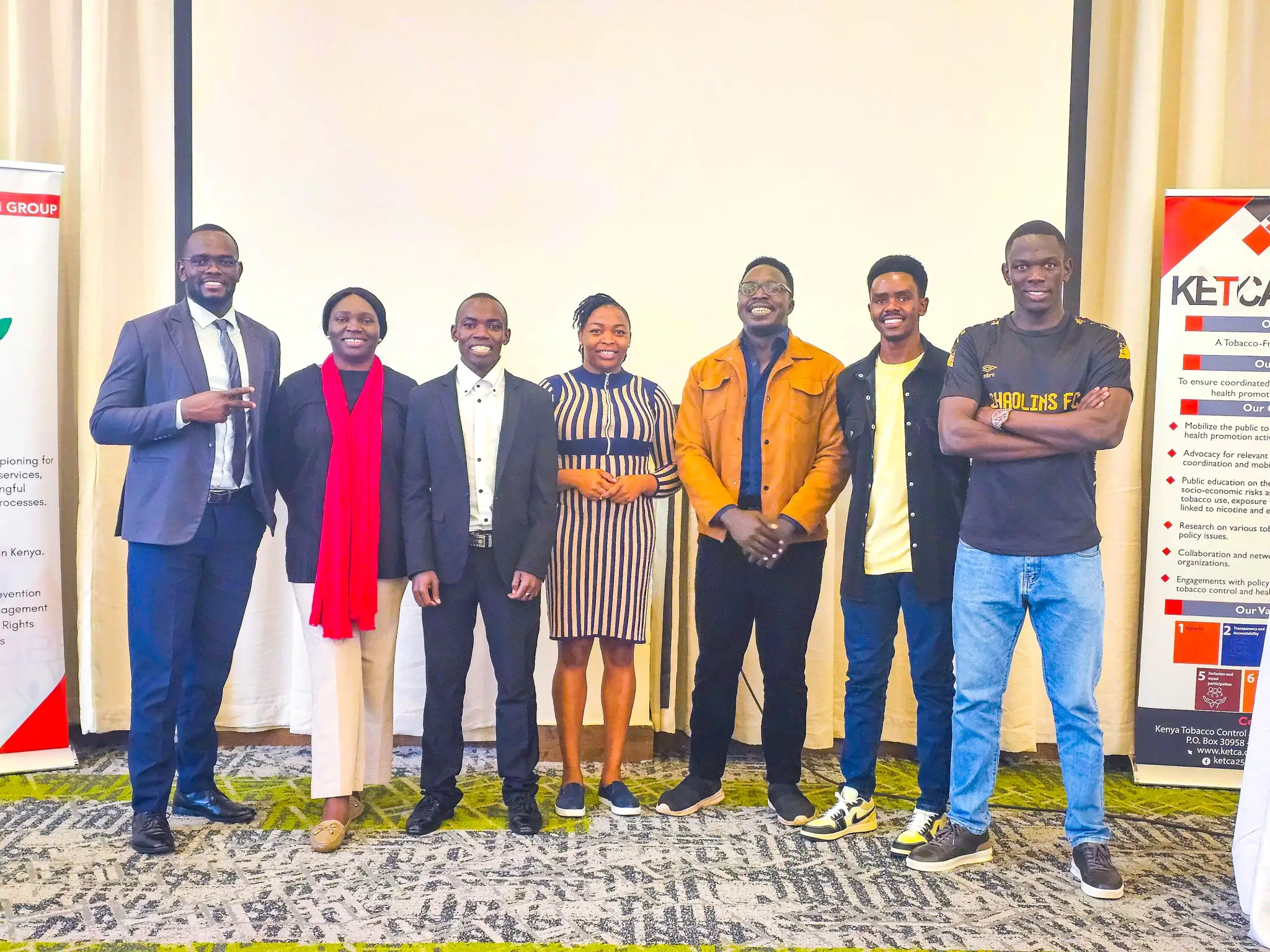
Stowelink Foundation participated in a two-day youth tobacco control training organised by the Kenya Tobacco Control and Health Promotion Alliance (KETCA). The training brought together young advocates from five partner organisations to strengthen their capacity in systematic monitoring of tobacco industry interference, tobacco control policy and digital advocacy.
Stowelink Foundation was represented by five young advocates, alongside its Founder and Chief Executive Officer, Ogweno Stephen. Their participation reflects the Foundation’s continued commitment to equipping young people with the knowledge and practical skills to contribute to tobacco control and broader non-communicable disease (NCD) prevention efforts in Kenya.
The training focused on moving youth engagement beyond general awareness towards practical, evidence-based advocacy. Participants explored how tobacco industry activities can influence public health policies, how such activities can be monitored and documented, and how digital tools can support stronger public health accountability.

Strengthening Youth Leadership in Tobacco Control
Tobacco use remains an important preventable risk factor for non-communicable diseases, including cardiovascular diseases, cancers and chronic respiratory conditions. Addressing its impact requires more than public awareness. It also requires informed advocates who can monitor industry activities, understand policy developments and contribute to efforts that protect public health.
The KETCA training, themed around the systematic monitoring of tobacco industry interference, provided an opportunity for young people to understand the relationship between commercial interests, tobacco control policies and public health.
For Stowelink Foundation, participation in the training builds on its wider work in NCD prevention, youth engagement, research and policy advocacy. The organisation recognises that young people should not only receive health information but also have the capacity to question, monitor and influence the systems that shape their health.
By bringing five advocates into the programme, Stowelink invested in developing a generation of young people who can contribute meaningfully to tobacco control efforts within their communities and beyond.

Learning Practical Tools for Monitoring Tobacco Industry Interference
A key component of the training focused on the practical methods used to identify, track and document tobacco industry activities.
Participants were introduced to a range of digital and investigative tools that can support systematic monitoring. These included:
- Google Advanced Search: To identify publicly available information and locate relevant records.
- Google Alerts: To monitor emerging news, developments and online mentions related to tobacco control.
- Wayback Machine: To review archived versions of websites and identify changes in publicly available information.
- LinkedIn: To examine publicly available professional and institutional information relevant to tobacco industry monitoring.
- Photovoice: To document community experiences and use visual evidence to communicate public health concerns.
These tools provide advocates with practical ways to gather and organise information, identify emerging developments and strengthen the evidence supporting their advocacy.
The emphasis was on understanding how digital information can be used responsibly and systematically to support tobacco control monitoring rather than relying solely on assumptions or unverified claims.
Advancing Digital Advocacy Through Evidence
As tobacco-related communication and marketing increasingly extend into digital spaces, public health advocates need stronger capabilities to monitor online activities and communicate evidence effectively.
The training explored how publicly available digital information can help identify patterns, relationships and developments relevant to tobacco control.
For young advocates, these skills create opportunities to move beyond responding to individual incidents towards more consistent monitoring and documentation of tobacco industry activities.
Evidence-based digital advocacy also strengthens engagement with policymakers, civil society organisations and communities. Documented findings can help advocates communicate concerns more clearly, support policy discussions and contribute to greater public accountability.
This approach aligns with Stowelink Foundation’s broader commitment to combining digital innovation, research, community engagement and policy advocacy to address public health challenges.
Connecting Tobacco Control to Kenya’s Wider NCD Prevention Agenda
Tobacco control is an important part of the wider effort to reduce Kenya’s growing burden of non-communicable diseases.
Tobacco use contributes to several major NCDs, making effective tobacco control essential to cardiovascular health, cancer prevention and the reduction of premature deaths.
However, the tobacco control environment continues to evolve. Emerging nicotine products, digital marketing channels and changing communication strategies create new challenges for public health advocates.
This makes systematic monitoring particularly important. Advocates need to understand not only traditional tobacco industry activities but also how new products, narratives and digital platforms may influence public understanding and policy decisions.
Through its participation in the KETCA training, Stowelink Foundation continues to strengthen its contribution to a more informed and coordinated tobacco control movement in Kenya.
Why Young People Must Be Part of Tobacco Industry Monitoring
Young people are often directly affected by the changing tobacco and nicotine environment, particularly as digital platforms create new channels through which products and related messages reach audiences.
Their participation in tobacco control must therefore extend beyond awareness campaigns and public education activities.
With appropriate training, young advocates can contribute to monitoring industry activities, documenting evidence, analysing digital information, communicating public health concerns and supporting policy advocacy.
For Stowelink Foundation CEO Ogweno Stephen, strengthening youth leadership is consistent with the organisation’s wider mission of creating opportunities for young Africans to participate meaningfully in improving public health.
The participation of five Stowelink advocates in the KETCA programme was therefore an investment in practical capacity. It provided an opportunity for the advocates to acquire skills that can be shared with their peers and applied in their respective communities.
Turning Training into Continued Tobacco Control Action
The impact of capacity-building initiatives depends on how the knowledge and skills acquired are applied beyond the training itself.
The approaches introduced during the two-day programme provide participating advocates with practical foundations for continued monitoring, evidence gathering and digital advocacy.
For Stowelink Foundation, the next step is to strengthen the application of these skills through its ongoing tobacco control work, including the Tobacco Industry Interference Digital Watch Initiative (TIIDWI).
TIIDWI focuses on monitoring and documenting tobacco industry interference, using digital approaches to track emerging developments and strengthen public health advocacy. The initiative reflects the importance of equipping young people with the tools to identify and respond to activities that may undermine tobacco control policies.
The collaboration between KETCA and the participating organisations also demonstrated the value of building networks of informed young advocates who can exchange knowledge and contribute to more coordinated action.
As Kenya continues strengthening its tobacco control response, systematic monitoring, evidence-based advocacy and meaningful youth participation will remain important.
Through its participation in the KETCA youth training, Stowelink Foundation reaffirms its commitment to building the capacity of young public health advocates and supporting efforts to protect tobacco control policies from industry interference.
A stronger tobacco control movement requires more than awareness. It requires young people who can investigate, document, communicate and advocate for evidence-based public health action.