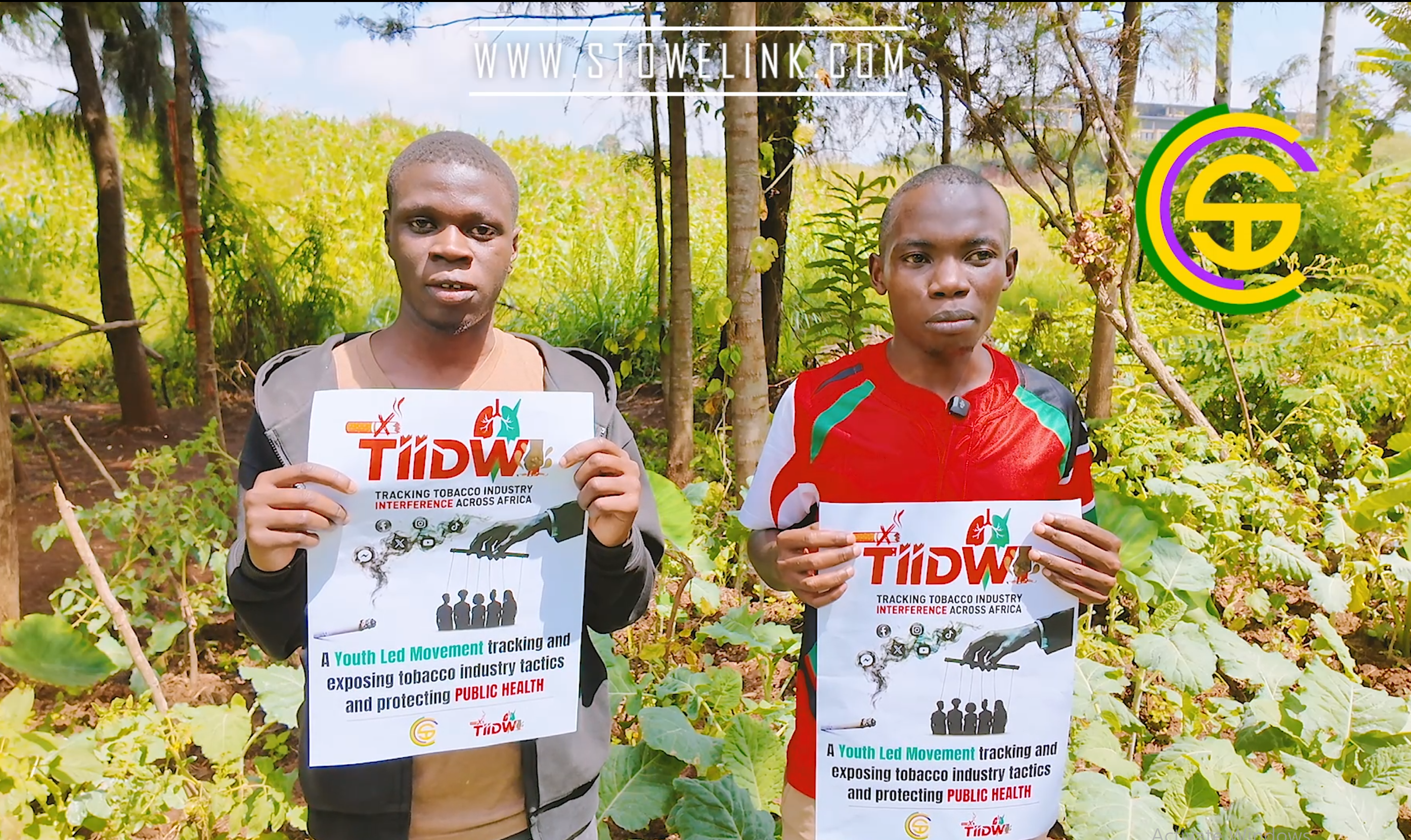
Youth advocates are speaking out about tobacco industry tactics, digital marketing and the health of a new generation
Stowelink Foundation has released a new series of videos featuring young advocates speaking about tobacco use, tobacco industry interference and the impact of tobacco and nicotine products on young people’s health.
The video series forms part of Stowelink’s Tobacco Industry Interference Digital Watch Initiative (TIIDWI), a flagship tobacco control advocacy project focused on tracking, documenting and challenging tobacco industry interference and misleading narratives.
Through the voices of young people, the series brings the issue closer to the communities most affected by tobacco industry strategies and asks an important question: Who gets to shape the health choices of the next generation?
Giving Young People a Voice
For Stowelink, tobacco control is not only a policy issue. It is a youth health issue.
Young people are increasingly exposed to sophisticated marketing, digital content and narratives designed to influence how tobacco and nicotine products are perceived. This makes it increasingly important for young people to understand how these tactics work and to have the confidence to challenge them.
The new videos provide a platform for Stowelink’s youth advocates to share their own views on tobacco use and the tobacco industry.
They speak about why they oppose tobacco use, why industry influence matters and why protecting young people’s health requires stronger public health action.
Their participation reflects Stowelink’s broader commitment to youth leadership in public health advocacy.

Understanding Tobacco Industry Interference
A major focus of TIIDWI is helping communities understand that tobacco industry interference can take many forms.
Industry influence does not always appear as direct advertising for cigarettes. It can involve public relations campaigns, misleading health narratives, corporate social responsibility activities, third-party voices, digital marketing and other strategies that can shape public perceptions and policy discussions.
TIIDWI works to identify and document these tactics so that advocates, policymakers and communities can respond with evidence.
The new youth video series helps translate this complex issue into accessible conversations that young people can understand and engage with.
The Digital Space Is Changing Tobacco Marketing
Digital platforms have transformed the way companies and other actors can communicate with young audiences.
Social media, influencers, online communities and rapidly changing digital trends create new opportunities for tobacco and nicotine products to gain visibility.
This makes digital monitoring an increasingly important part of tobacco control.
Through TIIDWI, Stowelink is building capacity to monitor tobacco-related narratives and identify emerging forms of industry influence in digital spaces.
The initiative also supports evidence-based advocacy that can help counter misleading messages before they become normalized.

Beyond Monitoring: Building Youth Advocates
TIIDWI is not simply about documenting tobacco industry interference.
It is also about building a stronger generation of tobacco control advocates.
Stowelink’s youth advocates are being supported to understand tobacco control policy, recognize industry tactics, communicate evidence and participate meaningfully in public health advocacy.
The video series is one way of putting that leadership into practice.
Rather than having young people spoken about, the project creates opportunities for young people to speak for themselves.
Protecting Public Health Policy
Tobacco control depends on strong policies and effective implementation.
When commercial interests influence policy discussions, public health priorities can be weakened.
Stowelink therefore sees monitoring tobacco industry interference as an important part of protecting evidence-based health policy.
The organization’s work contributes to broader tobacco control efforts in Kenya, including collaboration with tobacco industry monitoring partners and participation in national discussions around tobacco control.
The goal is straightforward: public health policy should be developed in the public interest and protected from commercial interference.
From Evidence to Advocacy
The TIIDWI video series connects evidence with public engagement.
Monitoring can identify a tactic. Research can explain it. Advocacy can help communities and decision-makers understand why it matters.
That pathway is central to Stowelink’s approach.
The organization believes that effective tobacco control requires more than producing reports. Evidence must reach people, communities and decision-makers in ways that are understandable, relevant and actionable.
Young advocates are therefore an important part of that process.
A Message From Young People to Young People
At the heart of the new series is a simple message: young people deserve the opportunity to grow up without being targeted by harmful tobacco and nicotine products.
The advocates featured in the videos are using their voices to challenge tobacco use and industry influence while encouraging their peers to think critically about the messages they encounter.
Their message is not about blaming individuals.
It is about understanding the systems, commercial interests and environments that shape health choices.
Continuing the Work
The release of the youth video series marks another step in Stowelink Foundation’s ongoing tobacco control work.
Through TIIDWI, the organization will continue monitoring tobacco industry interference, documenting emerging tactics, supporting youth advocacy and sharing evidence that can strengthen tobacco control efforts in Kenya and beyond.
The project is built around a clear principle:
Young people should not be the target of tobacco industry influence. They should be part of the movement protecting the health of their generation.
Through research, digital monitoring, storytelling and youth-led advocacy, Stowelink Foundation is working to make that principle a reality.
This is TIIDWI. This is youth-led tobacco control.