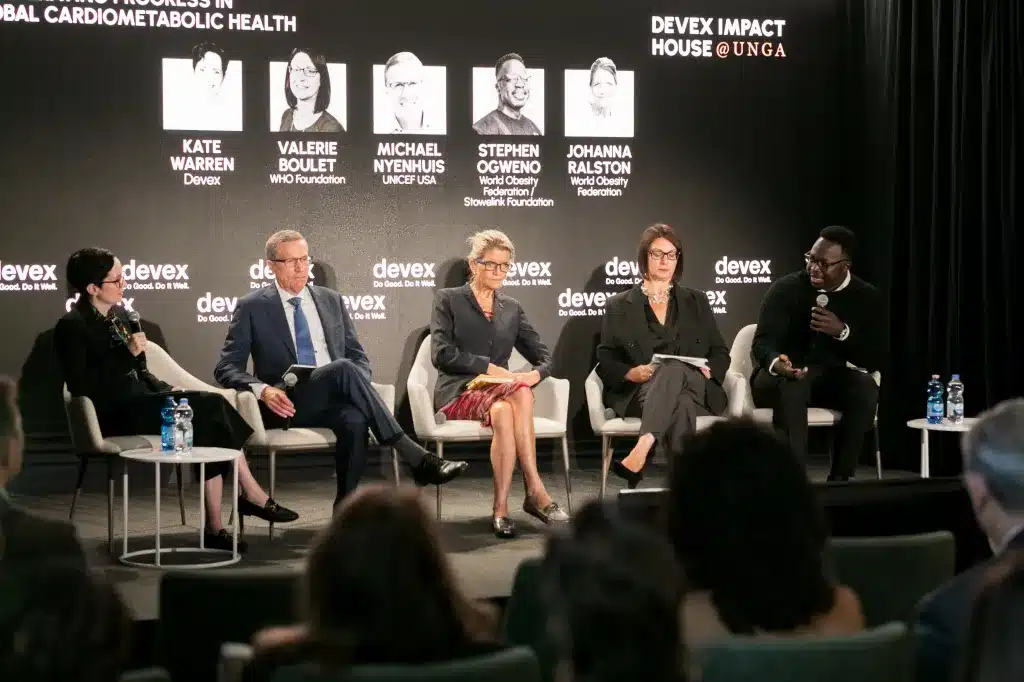
Stowelink Foundation participated in the Accelerating Progress in Global Cardiometabolic Health forum at Devex Impact House in New York during the 81st United Nations General Assembly (UNGA81), contributing an African public health and lived-experience perspective to discussions on obesity, diabetes and equitable access to treatment.
Stowelink Foundation joined global health leaders at the Accelerating Progress in Global Cardiometabolic Health forum during the 81st United Nations General Assembly in New York. Hosted by Devex in partnership with Lilly at Devex Impact House, the session brought together representatives from government, industry, civil society and global health institutions to examine how the world can accelerate progress in preventing and managing cardiometabolic diseases.
Representing Stowelink Foundation, its Founder and CEO, Ogweno Stephen, contributed to discussions on three interconnected priorities: recognising lived experience as expertise, ensuring people living with obesity participate meaningfully in policymaking, and expanding equitable access to obesity treatment, particularly in Africa and other resource-limited settings.
The participation reflects Stowelink’s growing work in obesity prevention, treatment literacy, community engagement and policy advocacy across Africa.


Addressing the Growing Global Burden of Cardiometabolic Diseases
Obesity, diabetes and cardiovascular diseases remain major public health challenges globally. Despite advances in prevention, diagnosis and treatment, access to quality care remains uneven, particularly in low- and middle-income countries.
Many health systems continue to face challenges related to limited healthcare financing, shortages of trained professionals, high treatment costs and inadequate access to essential medicines.
These challenges formed an important part of the UNGA81 discussion. While scientific innovation is creating new possibilities for cardiometabolic care, the benefits will remain limited if health systems cannot make these interventions accessible to the populations that need them.
During the discussion, Stowelink Foundation highlighted the importance of connecting scientific progress with the realities of communities, particularly those experiencing the greatest barriers to prevention and treatment.
Why Lived Experience Must Be Recognised as Expertise in Obesity Care
One of the central contributions from Stowelink Foundation was the need to recognise lived experience as a legitimate and valuable form of expertise in global health.
People living with obesity understand dimensions of the disease that may not always be captured through clinical research or epidemiological data alone. Their experiences navigating healthcare systems, encountering weight stigma, seeking treatment and managing long-term health needs provide important insights into how services and policies should be designed.
Ogweno Stephen, drawing on his own experience of growing up with obesity and his work in public health advocacy, emphasised that lived experience should not simply be included as a personal story during conferences or awareness campaigns.
It should inform the actual decisions shaping obesity prevention and care.
This means recognising people living with obesity as contributors to research, programme development, policy discussions and health-system reforms.
For Stowelink Foundation, this principle is central to building more inclusive approaches to obesity prevention and management. People affected by obesity should have a meaningful role in shaping the interventions intended to support them.


Moving Beyond Consultation to Meaningful Participation in Policymaking
The forum also provided an opportunity to highlight the difference between consultation and meaningful participation.
People living with obesity are often invited to share their experiences after priorities have already been established or programmes have been designed. While these opportunities can increase visibility, they do not necessarily give communities influence over the decisions that affect their health.
Stowelink Foundation advocates for a more inclusive approach in which people with lived experience participate throughout the policy cycle.
Their contributions should inform how health priorities are identified, how interventions are designed, how programmes are implemented and how outcomes are monitored and evaluated.
This approach can help policymakers identify barriers that might otherwise be overlooked, including the cost of treatment, geographical inequalities, stigma, inadequate information and difficulties navigating long-term care.
By placing lived experience within decision-making structures, obesity policies and programmes can become more responsive to the needs of the people they are intended to serve.
Ensuring Africa Benefits from Advances in Obesity Medicines
The development of new obesity medicines is changing the global conversation about obesity treatment.
These advances are reinforcing the understanding of obesity as a complex chronic disease that may require a combination of clinical care, behavioural support, prevention interventions and, where appropriate, pharmacological treatment.
However, access to these medicines remains a major concern for countries with constrained health resources.
High prices, limited insurance coverage, out-of-pocket expenditure, supply challenges and shortages of specialised obesity services can prevent people in many African countries from benefiting from emerging treatment options.
Stowelink Foundation highlighted the importance of ensuring that Africa is not left behind as the global obesity treatment landscape evolves.
Ogweno Stephen’s contribution emphasised that scientific innovation must be accompanied by deliberate strategies for equitable access. New medicines should be considered within the wider context of national health priorities, financing arrangements and the capacity of health systems to provide comprehensive obesity care.
The discussion also reinforced the need to avoid a situation where access to effective obesity treatment is determined primarily by geography or income.


Access to Obesity Treatment Requires Stronger Health Systems
Making obesity medicines available is only one part of improving access to care.
People living with obesity also need healthcare professionals who understand the disease, accessible diagnostic services, appropriate treatment pathways, long-term monitoring and support that is free from stigma and discrimination.
Stowelink Foundation emphasised the importance of strengthening primary healthcare as part of the response to obesity and other cardiometabolic conditions.
Primary healthcare provides an opportunity to integrate prevention, early identification, diagnosis, treatment and follow-up into services that are closer to communities.
This is particularly important because obesity frequently occurs alongside other conditions, including hypertension, type 2 diabetes and cardiovascular disease. Addressing these conditions through fragmented services can increase the burden on patients and healthcare systems.
Integrated care pathways can help countries respond more effectively to the interconnected nature of cardiometabolic diseases.
For Stowelink, this is also an important dimension of Universal Health Coverage. Access to healthcare should include prevention and long-term management of chronic diseases, not only treatment when complications become severe.
Connecting Global Health Policy with African Community Realities
Stowelink Foundation’s participation at UNGA81 builds on its work across Africa in non-communicable disease prevention, digital health, community education, research and policy advocacy.
Through its programmes, the Foundation works with young people, health professionals, community organisations and policymakers to strengthen public health responses to conditions affecting African communities.
Its obesity work, particularly through the Beyond the Scale initiative, seeks to move the conversation beyond body weight and individual responsibility towards a more comprehensive understanding of obesity.
The initiative addresses obesity literacy, stigma, lived-experience leadership, access to information and the wider social and environmental factors influencing health.
These priorities align with the Foundation’s contribution to global discussions on cardiometabolic health: ensuring that international commitments and scientific advances translate into practical improvements in people’s lives.
Multisectoral Collaboration for Better Cardiometabolic Health
The Accelerating Progress in Global Cardiometabolic Health session brought together perspectives from different parts of the global health ecosystem.
Participants included Professor Rachel Batterham, Michael Nyenhuis of UNICEF USA, Johanna Ralston of the World Obesity Federation, Valerie Boulet of the WHO Foundation, and representatives from the Pan American Health Organization and Mexico’s Ministry of Health.
The discussion explored the importance of collaboration across government, healthcare, research, industry, civil society and international organisations.
Stowelink Foundation’s contribution brought attention to the importance of community participation and lived experience within these partnerships.
Multisectoral collaboration must ultimately translate into better access to prevention, diagnosis and treatment, stronger health systems and improved outcomes for people living with cardiometabolic conditions.
Advancing the Conversation from Innovation to Equitable Access
The UNGA81 forum also marked the completion of Lilly’s 30×30 initiative ahead of its original 2030 target. The initiative aimed to expand access to quality healthcare for 30 million people annually in resource-limited settings.
The event provided an opportunity to reflect on this milestone and discuss a new global health initiative focused on cardiometabolic health.
For Stowelink Foundation, the wider discussion highlighted an important challenge for global health: ensuring that advances in medical science are matched by progress in health equity.
Innovation must be accompanied by affordable care, stronger primary healthcare systems, appropriate financing and meaningful participation by affected communities.
As obesity continues to receive greater attention in global health policy, African perspectives and community experiences must remain part of the conversation.
Through its participation at the Accelerating Progress in Global Cardiometabolic Health forum, Stowelink Foundation continues to contribute to discussions on how obesity prevention, treatment and policy can become more inclusive, equitable and responsive to the realities of African communities.
The Foundation believes that progress in cardiometabolic health should not be measured only by scientific breakthroughs, but also by how many people can access the benefits of those breakthroughs.
For Stowelink Foundation, the goal remains clear: healthier communities, stronger health systems and a future in which everyone living with obesity can access the information, support and care they deserve.